Pran has over 14 years of experience including both in the industry and SAP. Pran is passionate about exploring use cases in the metaverse to enable business value driven SAP sustainable transformation for clients. He is a regular blogger and has conducted numerous thought leadership sessions on the topics of metaverse, Web3, NFTs, innovations, sustainability, megatrends, and SAP.Read More
Pran has over 14 years of experience including both in the industry and SAP. Pran is passionate about exploring use cases in the metaverse to enable business value driven SAP sustainable transformation for clients. He is a regular blogger and has conducted numerous thought leadership sessions on the topics of metaverse, Web3, NFTs, innovations, sustainability, megatrends, and SAP. Pran has an MBA degree in Marketing and a BE degree in Electronics and Communication and an AWS certified Cloud Practitioner. He spends his free time in online gaming and exploring upcoming metaverse platforms.
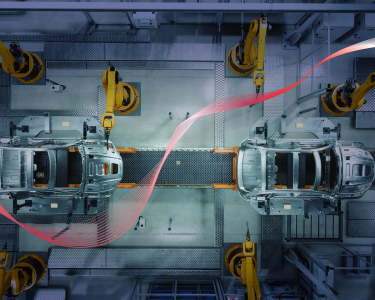
Every manufacturer I talk to is investing heavily in AI, driving smarter dashboards and sharper forecasts, making their factories more ‘intelligent’ than ever before. With this AI surge in manufacturing, we can now predict supply chain delays, energy spikes, and quality risks before they manifest.Despite this progress, why does it still take months to respond to demand shifts? Why do minor product tweaks trigger major disruptions? And more importantly, why does a single machine failure still cause ripple effects across the entire production line? The reality lies in a structural paradox: we have built smart digital brains, but they remain connected to rigid, ‘analog’ bodies.Today, AI decides in seconds. Yet factories take months to adapt. In high-stakes environments like manufacturing, intelligence without the ability to physically act is just observation. To thrive, we need more than just smart factories; we need living factories where the digital and physical layers are designed to adapt and operate in sync.Adaptive Manufacturing—The Nervous System of OperationsTraditional manufacturing was built for stability: long runs, predictable demand, and fixed processes. That environment no longer exists. Now, variability is the baseline in demand, supply, energy prices, and regulations. To manage this volatility, an adaptive manufacturing approach is required. Operating as the factory’s nervous system, adaptive manufacturing continuously senses and adjusts the production environment. By embedding AI and advanced analytics directly into the ‘muscles’ of daily operations, it accelerates decision-making:Self-Correcting Quality: Identifies process drift and rectifies parameters before defects move downstream.Golden Batch Optimization: Recognizes ideal operating conditions that deliver optimal performance and automatically steers the system in alignment.Real-time Production Management: Balances throughput, cost, and energy use in response to fluctuating demand and utility signals.Adaptive manufacturing transforms intelligence into action by embedding decision making directly into operational workflows.The Living Factory: How AI & SRMS Transform ManufacturingSmart Reconfigurable Manufacturing Systems (SRMS)-The Muscular FoundationFactories continue to rely on production systems built around fixed automation. These systems perform well in stable environments. But when demand shifts or product variants expand, they lead to engineering downtime, revalidation cycles, and revenue loss. Smart reconfigurable manufacturing systems (SRMS) are built to overcome these challenges. They serve as the operational muscles, with flexibility engineered into the design from the outset. Instead of monolithic lines, they rely on modular configurations that can evolve as requirements change.Modular by Design: SRMS modules are the industrial building blocks. They can be added, removed, or repositioned without dismantling the entire line. When a new product variant is launched, the layout evolves without disruptive reconstructions.Self-aware Equipment: Assets use embedded sensing to identify performance drift and trigger timely intervention, reducing unexpected downtime.Ecosystem Agnostic: They support integration across OEMs and generations, reducing lock-in and maintaining long-term scalability.The Living Factory- Where Intelligence Meets ExecutionWhen an adaptive digital layer is paired with a reconfigurable physical body, the factory stops behaving like a static asset and starts behaving like a living, coordinated system. It manages its own operations: if energy costs spike, the factory shifts high-load operations to different windows autonomously, avoiding a financial crisis. It evolves: introducing a new product now begins through a digital twin; it is validated virtually and is then reflected physically through reconfiguration. It heals: if one module goes down, production doesn’t collapse; workflows are rerouted, capacity flexes, and the system keeps running while maintenance steps in. With a Living Factory, resilience is no longer dependent on exceptional efforts; it is built right into the design.A Living Factory is defined not by intelligence alone, but by how quickly physical operations can act on that intelligence.People - The Heart of Modern ManufacturingA Living Factory does not eliminate humans; it empowers them. As systems become more dynamic, the role of the workforce moves from manual labor to augmented expertise. Humans serve as conductors of intelligent, adaptive systems, guiding manufacturing operations toward defined performance, quality, and resilience objectives. The live adaptive manufacturing model supports operators through:AR-Guided Instructions: Visual guidance aligned to current machine settings and process states.Digital Twins: Simulation-backed insight into root causes and performance dependencies.Intelligent Decision Support: Exception-driven alerts and scenario analysis to support informed intervention.The Bottom LineFor years, the goal was to make factories smart. Now, the real differentiator is making them adaptable. As technologies evolve and markets shift, manufacturers that thrive are not those with the biggest plants or the most AI solutions; they will be the ones that can quickly adjust their factories, layouts, outputs, and operating behavior in response to change. The question is no longer whether your factory has AI. It is how fast your physical operations can act on the intelligence to pivot before the window of opportunity closes.
The State of Play: AI Meets the Enterprise Applications Platform LandscapeEnterprise application platforms power the most critical and core parts of today’s business. Key finance processes run through ERP systems. Workforce events depend on HCM platforms. Customer engagement flows through CRMs. Operational work relies on information from ITSM, BPM, and other related systems.The current enterprise AI discourse focuses solely on models, agents, and SDLC automation, largely through a ground-up engineering lens. What receives far less attention is how enterprise application platforms are using the same AI advancements and independently evolving their architectures, commercial models, and platform features. AI capabilities across these platforms are evolving unevenly, driven by individual vendor roadmaps and the flexibility and preparedness of the enterprise landscape. Additionally, the platforms are also selectively embracing newer AI standards in ways that reflect real operational constraints specific to their domains.From a customer standpoint, most enterprises are moving from point to pilots, copilots, or isolated use cases while also deliberating strategies for sustained impact across end-to-end processes. In this leap, there are plenty of technology choices, but deliberations center on how best to introduce AI into the same systems designed for control, correctness, and auditability. In many cases, without a conscious effort to transform, there is a clear risk of adding intelligence without holistically evaluating decision ownership or business process execution. This approach leads to predictable results. Users save time on individual tasks, but processes do not materially change or transform as a result of the infusion of AI. Decisions remain disjointed. AI continues to support work but doesn’t evolve to drive outcomes at an enterprise level.Due to this phenomenon, enterprise leaders are dealing with practical questions about where AI should operate, what it is allowed to decide, and which actions it can trigger without human approval. Without clear answers, AI increases complexity rather than reducing it.AI Adoption and Core Enterprise PlatformsEnterprise platforms impose real balancing constraints, and these constraints vary by system. ERP and HCM platforms enforce transactional integrity and compliance. CRM platforms allow more flexibility but tightly govern data models and user interactions. ITSM and BPM platforms depend on event-driven workflows with defined control points. Integration platforms value reliability and consistency over interpretation. These fundamental differences directly affect how AI can be applied. A pattern that works in CRM may not be acceptable in ERP. What feels safe in ITSM may violate controls in finance or HR operations.Extensibility further shapes what is possible. Some platforms encourage side-by-side logic through APIs and events. Others strictly limit how and where logic can run. Ignoring these differences results in design patterns that fail under real operational conditions.Adding to the challenge, governance further complicates. Many enterprise flows require explicit approvals. Some allow limited automation within defined bounds. Very few allow autonomous execution across systems. In such cases, AI initiatives should anticipate and plan for these critical governance controls ahead of time.Enterprise AI scaling impacts when individual platform constraints and roadmaps are not sufficiently deliberated and factored into enterprise architecture and application design.A Shift Toward Outcome-aligned AIA more grounded approach to AI adoption is beginning to emerge in enterprise programs. It starts with an outcome-based focus instead of models and tools. The approach urges enterprise architects and product teams to identify decisions that truly matter, define specific actions to achieve them, and determine where AI can safely operate within and around each application platform boundary. This results in three clear patterns of AI adoption:Native AI operates inside existing application workflows and helps organizations realize value from capabilities already embedded in the platform.Extended AI runs alongside the platform, using platform-governed APIs and events to introduce differentiated logic without breaking control.Add-on AI operates independently and integrates results back when outcomes span multiple systems or ownership goes beyond a single application platform.Each of these infusion modes comes with different delivery risks, governance impact, and commercial implications. Choosing the wrong approach increases complexity and risks execution results. At the same time, AI capabilities are evolving and maturing on multiple fronts. Predictive insights and assisted generation have become common. The scope of automated task execution is also rapidly expanding. Eventually, these would lead to agent-based orchestration opportunities for use cases where authority limits and audit requirements are well understood.Successful AI delivery starts by leveraging the right capabilities, knowing the platform guidelines and boundaries, and defining authority without ambiguity.The Bottom Line: Designing AI Adoption for Governed ExecutionEffective enterprise AI adoption requires teams to design AI with individual platform realities in mind. Through a diligent approach of aligning decision logic with governance models and implementing execution paths that reflect how work actually runs, enterprises can get the most out of their adoption efforts. ERP, CRM, ITSM, and BPM systems are to be treated as execution engines, especially with distinct data, process, and usage patterns that evolve along their own AI roadmaps.Such an approach reduces rework, builds trust, and enables scale. In practice, AI adoption in enterprise applications comes down to a few fundamental questions: Where are decisions made? How are actions executed? And how is control maintained as systems interact?Programs that get this right early move faster and avoid downstream issues. More importantly, they can embrace new AI possibilities without being constrained by limiting architectural and operational choices.
GCC Led Digital TransformationImagine an office thousands of miles from headquarters that not only provides supporting functions but is also positioned to spearhead next-generation organizational initiatives, such as architecting and building corporate AI. This is the new avatar of GCCs, which have moved up the value chain from offshore extensions to fully integrated Global Value centers. The rise of GCCs is fueled by a hunger for high-end talent regardless of location, enabled by high-speed connections, collaboration tools, and the ability to process data on central (cloud) servers from anywhere in the world. Today’s discussion explores how these centers are now leading digital transformation, proving that innovation has no borders.The GCC is no longer the back office, it is the leader of the modern and agentic enterprise.GCCs as Global Value Engines for the Agentic EnterpriseCultural Integration & Unified VisionInhouse teams share the culture & values as HQ fostering loyalty & ownershipAccess to talent at scaleAbility to tap into large talent pools in multiple regions solving the global talent crunchIntellectual property & data sovereigntyBetter control in securing intellectual property & sensitive data protecting critical assetsOperational Resilience24 x7 development across time zones ensuring continuity & speedEngine for AI & Agentic TransformationPositioned to build AI solutions and automation of workflows driving agentic innovationRedefining the Role of Global System Integrators (GSIs)The rise of GCCs has disrupted the fundamental business model of GSIs, which historically relied on labor arbitrage and fast ramp-up of talent using their “bench” pool of resources. Because GCCs are cost-centers, not profit centers, they can attract better talent at the same “blended price” as a GSI.However, there are ways in which GSIs can still complement GCCs in achieving their goals more quickly and efficiently. GSIs are successfully pivoting to a newer way of working by playing the following roles1. Strategic EnablersGSIs have mastered the art of quickly setting up and scaling an offshore development center while complying with all local regulatory requirements. The mature build-operate-transfer (BOT) model can provide newer (and smaller) companies with a quick start in establishing a GCC.2. The “Heavy Lifters”As GCCs move up the maturity curve to focus on core IP and innovation, they often find “non-core” services distracting. GSIs are increasingly enlisted for the heavy lifting of infrastructure and legacy maintenance.3. Cross-Industry ExpertiseWhile GCC has deep vertical knowledge, GSIs bring vertical knowledge from similar companies and “horizontal” best practices from working across multiple industries.4. Rapid Skill Refresh and Capability ArbitrageTechnologies, especially in the AI space, are evolving very quickly. GSIs are replacing technical skills faster than GCCs because they plan/equip for new technologies at scale. While GCC will need months to replace or reskill existing employees, GSI can quickly pivot specialized talent from one global client to another, providing GCC with immediate “on-demand” expertise.How GSI’s are Ensuring Relevance and Delivering ValueThe shift in demand from customers and the rise of GCCs give GSIs an opportunity to differentiate through capability arbitrage via initiatives like:1. Localized Sales StructureTraditionally, GSI used to win work by pitching to leaders in headquarters, even for work to be performed in the GCC. With a shift in the GCC leadership structure, they are empowered to award work directly. GSI's sales teams are now aligned directly with the GCC location, ensuring a presence where decisions are made.2. Niche SpecializationGSIs are transforming themselves from “service providers” to “technology owners” through heavy investments in PhD-level talent by GSIs in fields like Neuromorphic AI and quantum computing3. Ready-to-Deploy SolutionsGenerative AI is fast becoming a commodity skill. GSIs are differentiating themselves by investing in vertical-specific Agentic frameworks that can orchestrate thousands of AI agents across functions such as sales, operations, procurement, and supply chain. A combination of AI agents for governance-based processing and humans for empathy and decision making is the solution gaining attention.GSIs that fail to adapt to this GCC first reality will find themselves obsolete in an era defined by global value, not global labor.Scaling Ahead at SpeedDigital transformation is no longer a headquarters-led mandate; it is being architected and tested within the GCC in close collaboration with a new breed of GSIs. The GCC is no longer the back office—it is the leader of the modern, agentic enterprise. GSIs that fail to adapt to this GCC-first reality will find themselves obsolete in an era defined by global value, not global labor.